

Sub-Panel Installation Guide (Step-By-Step Safety Tips)
Adding new circuits to your home can feel overwhelming when your main electrical panel is already packed full. That is where a sub-panel comes in. A sub-panel installation gives you extra breaker space, better organization, and a safer way to power a garage, workshop, addition, or EV charger. At Caliber Electric in Oklahoma City, we handle these projects every week, and we know how important it is to get the details right.
This guide walks you through what a sub-panel is, the tools you need, how the installation works, and the safety tips that keep everyone protected. Electrical work is serious business, so use this as a knowledge resource. When in doubt, always lean on a licensed pro.
What Is a Sub-Panel and When Do You Need One
A sub-panel is a smaller electrical panel that branches off from your main service panel. Think of it as a satellite hub. It receives power through a feeder cable from the main panel, then distributes that power to its own set of breakers. This is handy when your main panel runs out of room or when you need dedicated power in a separate part of your property.
Sub-panels make wiring cleaner and give you more control over specific areas. If you are unsure whether your home needs one, our team can help with a full assessment during our broader residential electrical services in Oklahoma City. Here are the most common reasons homeowners install one.
- Your main panel has NO open breaker slots left.
- You are building a detached garage, shop, or shed that needs power.
- You added a room, basement finish, or home addition.
- You want dedicated circuits for an EV charger or heavy appliances.
- You need to reduce long wire runs by placing power closer to the load.
- You want to organize circuits for a specific zone like a workshop.
Tools and Materials Required for Sub-Panel Installation
Having the right gear on hand before you start makes the job smoother and safer. A sub-panel install is not a job you want to pause halfway through because you are missing a part. Below is a general list of what a typical project calls for. Exact materials depend on your amperage, distance, and local code requirements.
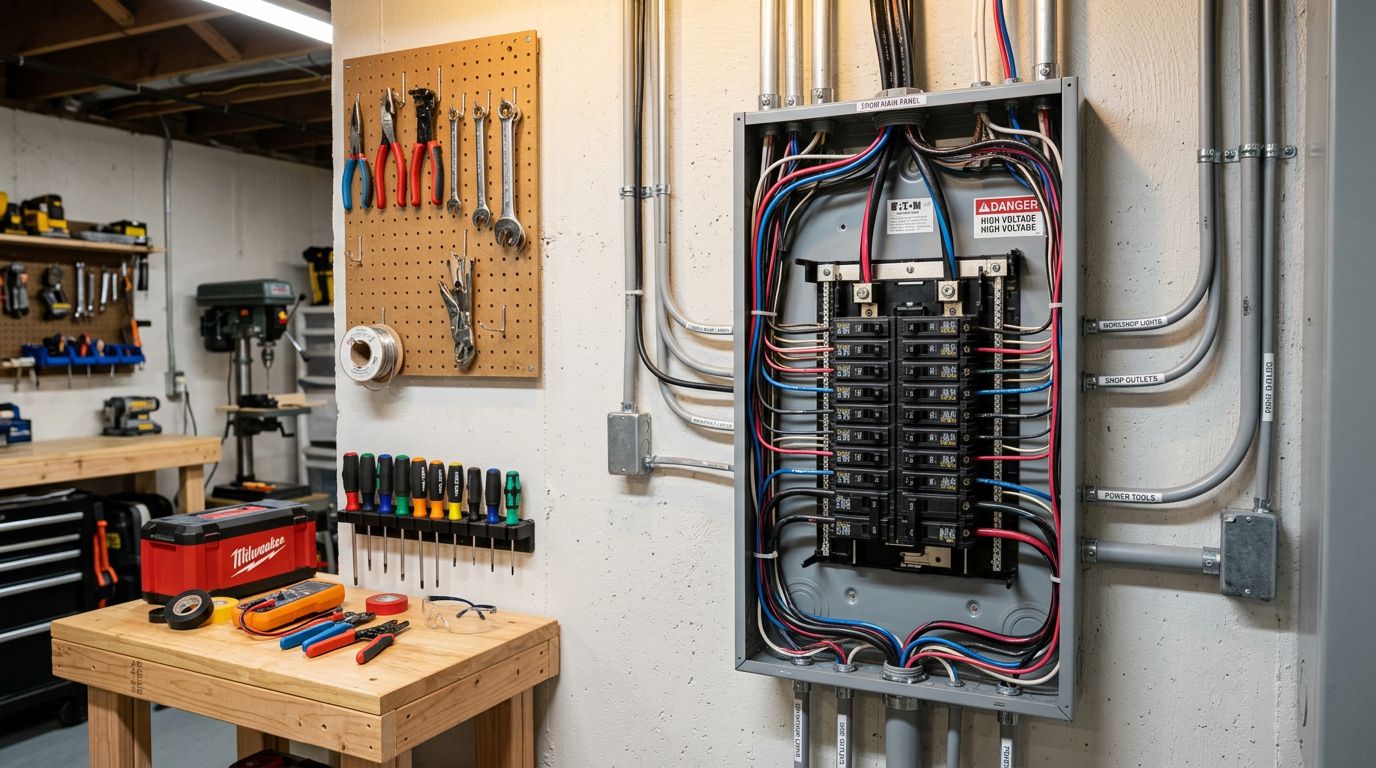
- Sub-panel enclosure rated for your amperage needs.
- Feeder cable or conduit with properly sized conductors.
- A double-pole breaker in the main panel for the feed.
- Branch circuit breakers for the sub-panel.
- Separate ground bar and neutral bar (they must stay isolated).
- Grounding rods and grounding wire when required.
- Wire strippers, screwdrivers, and a torque screwdriver.
- A voltage tester or multimeter.
- Cable clamps, connectors, and mounting hardware.
- Personal protective equipment like insulated gloves and safety glasses.
How to Install a Sub-Panel Step by Step
The steps below give you a clear picture of how a sub-panel installation flows from start to finish. Keep in mind that codes vary and permits are often required in Oklahoma City. If any part of this feels beyond your comfort level, our electrical panel installation and repair experts can take it from here. Never rush electrical work.
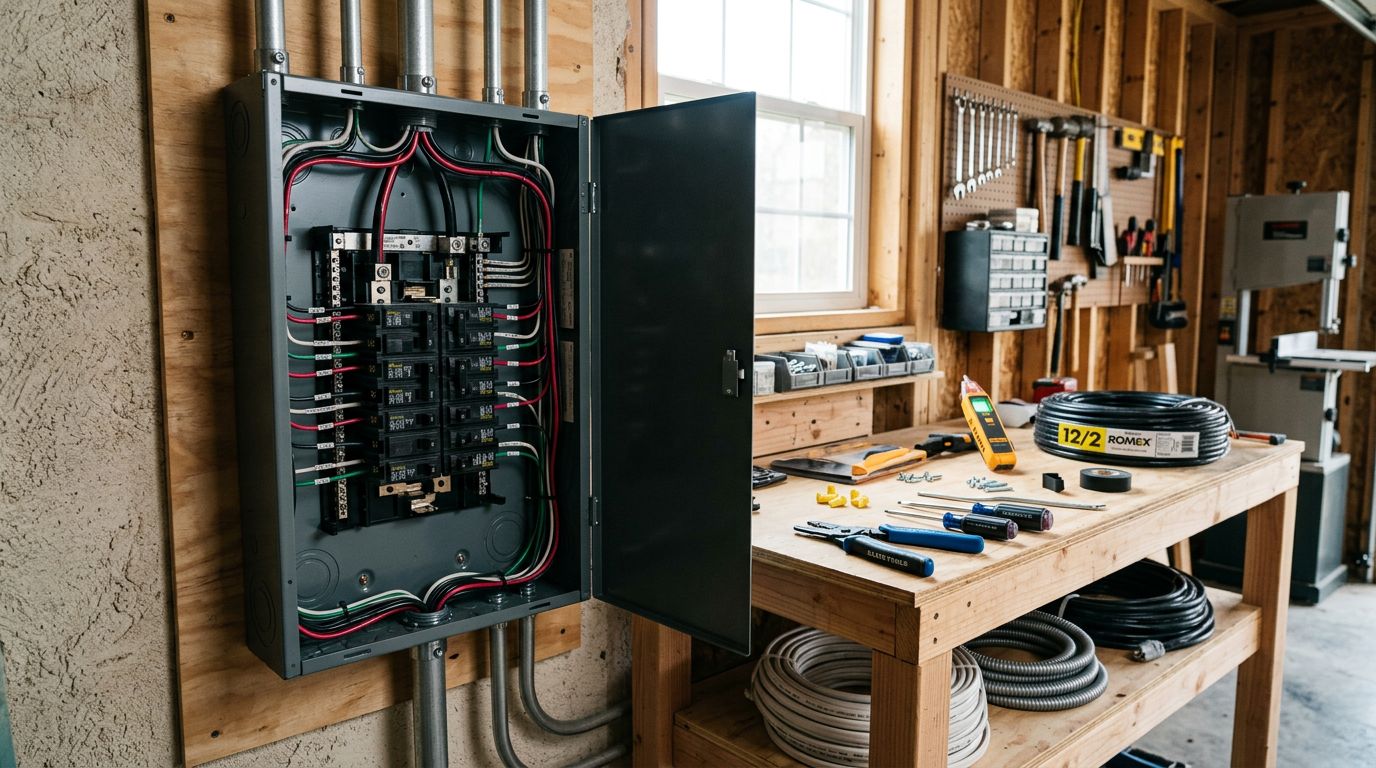
- Turn off the main power. Shut off the main breaker and verify there is NO voltage with a tester before touching anything.
- Plan the location. Mount the sub-panel where it is accessible, dry, and has proper clearance around it.
- Install a feeder breaker. Add a correctly sized double-pole breaker in the main panel to feed the sub-panel.
- Run the feeder cable. Route the conductors from the main panel to the sub-panel through conduit or approved cable.
- Mount the sub-panel enclosure. Secure it firmly to the wall using the proper hardware.
- Connect the feeder wires. Attach the hot conductors, neutral, and ground to the correct terminals inside the sub-panel.
- Keep neutral and ground separate. In a sub-panel, the neutral bar must be isolated from the ground bar. This is critical.
- Install branch breakers. Add breakers and wire your new circuits into the sub-panel.
- Add grounding electrodes. Install grounding rods for a detached structure when code requires it.
- Inspect your work. Double-check every connection and torque terminals to spec.
- Restore power and test. Turn the main back on, then test each circuit for proper operation.
- Schedule an inspection. Have the work inspected to confirm it meets local code.
Essential Safety Tips for Sub-Panel Wiring
Safety is not optional when you are working with electricity. A small mistake can lead to shock, fire, or costly damage. Follow these guidelines closely on every project.
Always Confirm the Power Is Off
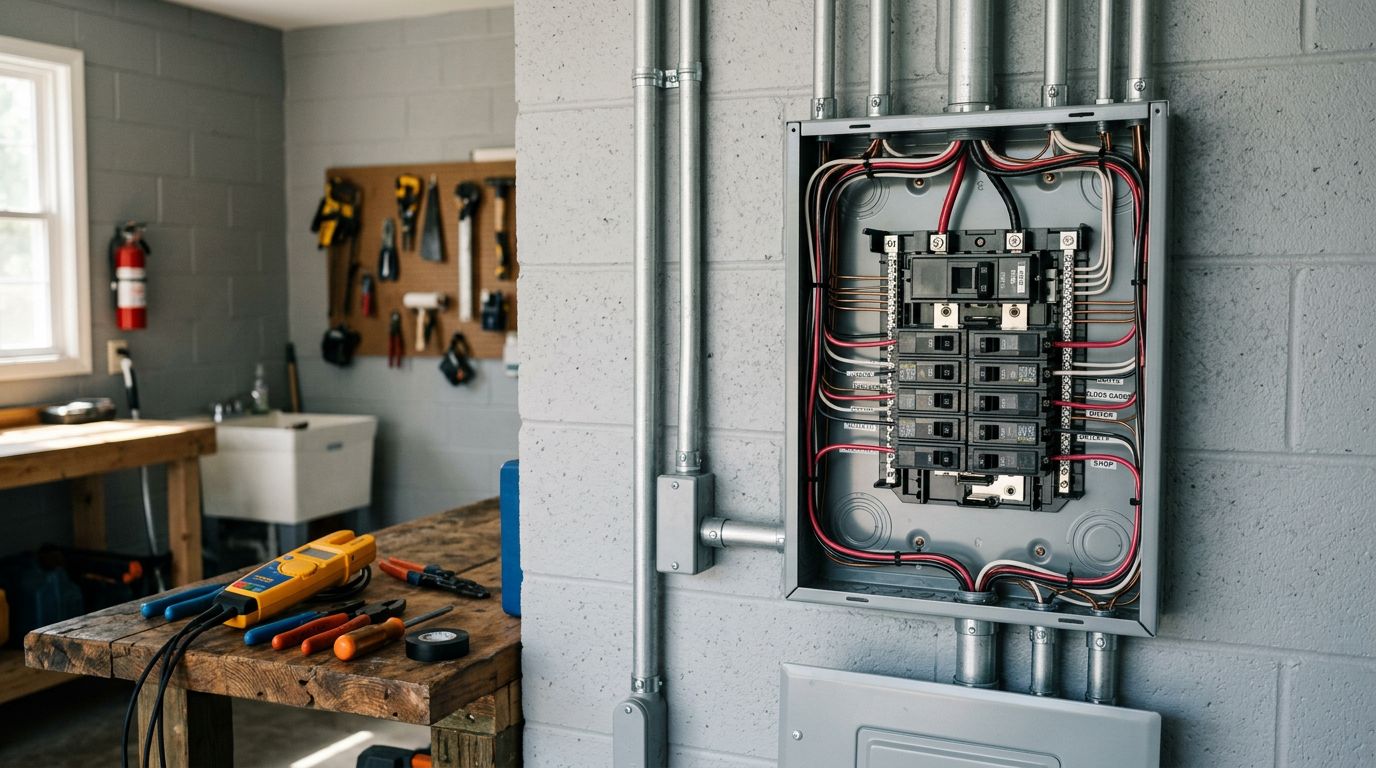
Never trust that a breaker is off just because you flipped it. Use a voltage tester on every conductor you plan to touch. Verify twice. Electricity does not give second chances.
Keep Neutral and Ground Isolated
This is one of the biggest safety rules for sub-panels. The neutral and ground bars must NOT be bonded together in the sub-panel. They only bond at the main service. Getting this wrong creates dangerous parallel paths for current.
Use Properly Sized Wire and Breakers
Undersized wire overheats. An oversized breaker can allow too much current before it trips. Match your conductors and breakers to the load and the code requirements every time.
Torque Every Connection
Loose connections are a leading cause of electrical fires. Use a torque screwdriver to tighten terminals to the manufacturer spec. Snug is not the same as correct.
Respect Permits and Inspections
Permits exist for a reason. An inspection catches mistakes before they become hazards. Skipping this step can also cause problems when you sell your home.
Know Your Limits
If anything feels uncertain, stop. Calling a licensed electrician is far cheaper than fixing a mistake or dealing with an injury. There is no shame in getting help.
How to Size and Wire a Sub-Panel Correctly
Sizing a sub-panel is about matching capacity to your real electrical needs while leaving room to grow. If you undersize it, you will trip breakers constantly. If you oversize the feed without proper wire, you create a fire risk. The right approach balances the load calculation, the wire gauge, and the breaker rating. Our team often handles this during broader electrical maintenance and upgrade projects for homes and businesses.
Here are the key factors that guide correct sizing and wiring.
- Calculate your load. Add up the expected amperage of everything the sub-panel will serve.
- Choose the amperage rating. Common sub-panels are 50, 60, 100, or 125 amps depending on demand.
- Match wire gauge to amperage. Larger loads require thicker conductors to carry current safely.
- Account for distance. Long runs may need a larger wire size to handle voltage drop.
- Use four-wire feeds. Two hots, a neutral, and a ground keep everything safe and code compliant.
- Leave spare slots. Extra breaker space now saves you money on future additions.
- Follow local code. Oklahoma City requirements guide the final specs, so always verify.
Common Sub-Panel Installation Mistakes to Avoid
Even handy homeowners run into trouble with sub-panels. Most problems come from small oversights that snowball into safety issues. Knowing what to watch for helps you avoid the most common pitfalls. If you spot any of these in an existing install, get it corrected fast.
- Bonding neutral and ground in the sub-panel. This is the number one error.
- Using undersized feeder wire for the amperage or distance.
- Forgetting to install a separate grounding electrode when required.
- Leaving connections loose instead of torquing them to spec.
- Overloading the sub-panel beyond its rated capacity.
- Skipping the permit and inspection process entirely.
- Mounting the panel in a wet or hard-to-reach spot.
- Mislabeling breakers, which makes future work confusing and risky.
- Using breakers that are not compatible with the panel brand.
Conclusion
A sub-panel is a smart way to expand your home’s electrical capacity, but it demands careful planning and strict attention to safety. Remember the essentials. Keep neutral and ground separate, size your wire and breakers correctly, torque every connection, and always follow local code with proper permits and inspections. These steps protect your home and your family.
If you would rather leave the heavy lifting to trained pros, Caliber Electric proudly serves Oklahoma City, Moore, Norman, Midwest City, Yukon, Edmond, Del City, Mustang, Bethany, and Guthrie. Reach out to our team when you are ready to plan your next sub-panel project the SAFE way.


