

Wiring Capacity For Appliances (Safety Guide 2026)
When you plug in a new appliance, you probably expect it to just work. But behind that outlet is a web of wiring that has a LIMIT. Wiring capacity for appliances is one of those things most homeowners never think about until something goes wrong. At Caliber Electric in Oklahoma City, we see the results of overloaded circuits all the time, and it usually starts with wiring that was never sized for the job.
This safety guide walks you through what wiring capacity really means, how to calculate what your appliances need, and how to spot the warning signs before they turn into a bigger problem. Let us dig in.
What Is Wiring Capacity and Why It Matters for Appliances
Wiring capacity is the amount of electrical current a wire can safely carry without overheating. Every wire has a rating measured in amps, and that rating depends on the wire’s thickness, or gauge. When an appliance pulls more current than the wire can handle, the wire heats up. Over time, that heat can damage insulation, melt connections, and even start a fire.
Appliances are hungry for power. A microwave, a dryer, an oven, and an air conditioner all draw very different loads. Matching the right wire to the right appliance is not optional. It is the foundation of a SAFE electrical system. Here is why it matters so much.
- Undersized wiring overheats and becomes a fire hazard.
- Correct wiring keeps voltage stable so appliances run efficiently.
- Proper capacity prevents nuisance breaker trips and flickering lights.
- It protects the lifespan of expensive appliances like refrigerators and HVAC units.
- It keeps your home compliant with electrical code, which matters for insurance and resale.
How to Calculate the Wiring Capacity Needed for Your Appliances
Figuring out wiring capacity is not guesswork. It comes down to knowing how much power an appliance draws and matching that to a wire and breaker that can handle it. If you are adding a new dedicated circuit, this is where a professional plug installation in Oklahoma City makes a real difference, because the wiring gets sized correctly from the start. Here is a simple way to think through the math.
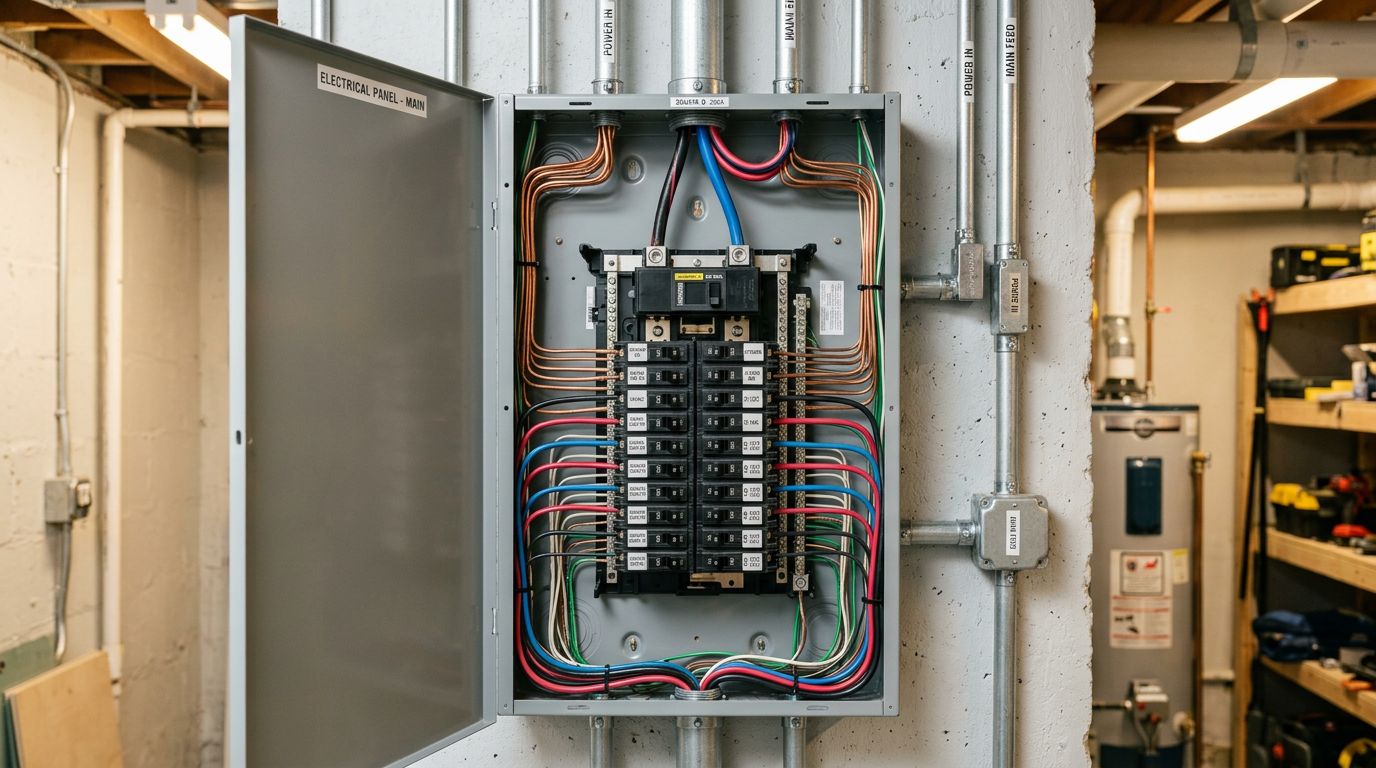
- Find the appliance wattage. Check the label or manual. Most appliances list their wattage or amperage right on a nameplate.
- Convert watts to amps. Divide the wattage by the voltage. A 1500 watt appliance on a 120 volt circuit pulls about 12.5 amps.
- Apply the 80 percent rule. Circuits should only carry 80 percent of their rated load continuously. So a 20 amp circuit should not carry more than 16 amps of steady load.
- Add up everything on the circuit. If more than one device shares a circuit, total their amps to make sure you stay under the limit.
- Match the wire gauge to the amps. Once you know the total load, pick a wire gauge rated for that current with room to spare.
- Confirm the breaker size. The breaker must protect the wire, not just the appliance. The breaker and wire have to work as a matched pair.
If any of these steps feel murky, that is normal. Load calculations get complicated fast when you factor in multiple appliances and long wire runs. When in doubt, have a pro run the numbers.
What Wire Gauge Do Common Household Appliances Require
Wire gauge is a numbering system where SMALLER numbers mean THICKER wire. Thicker wire carries more current. The table below gives typical gauge and breaker pairings for common appliances. Keep in mind these are general guidelines. Actual requirements depend on wire length, appliance specs, and local code, so always verify before you wire anything.
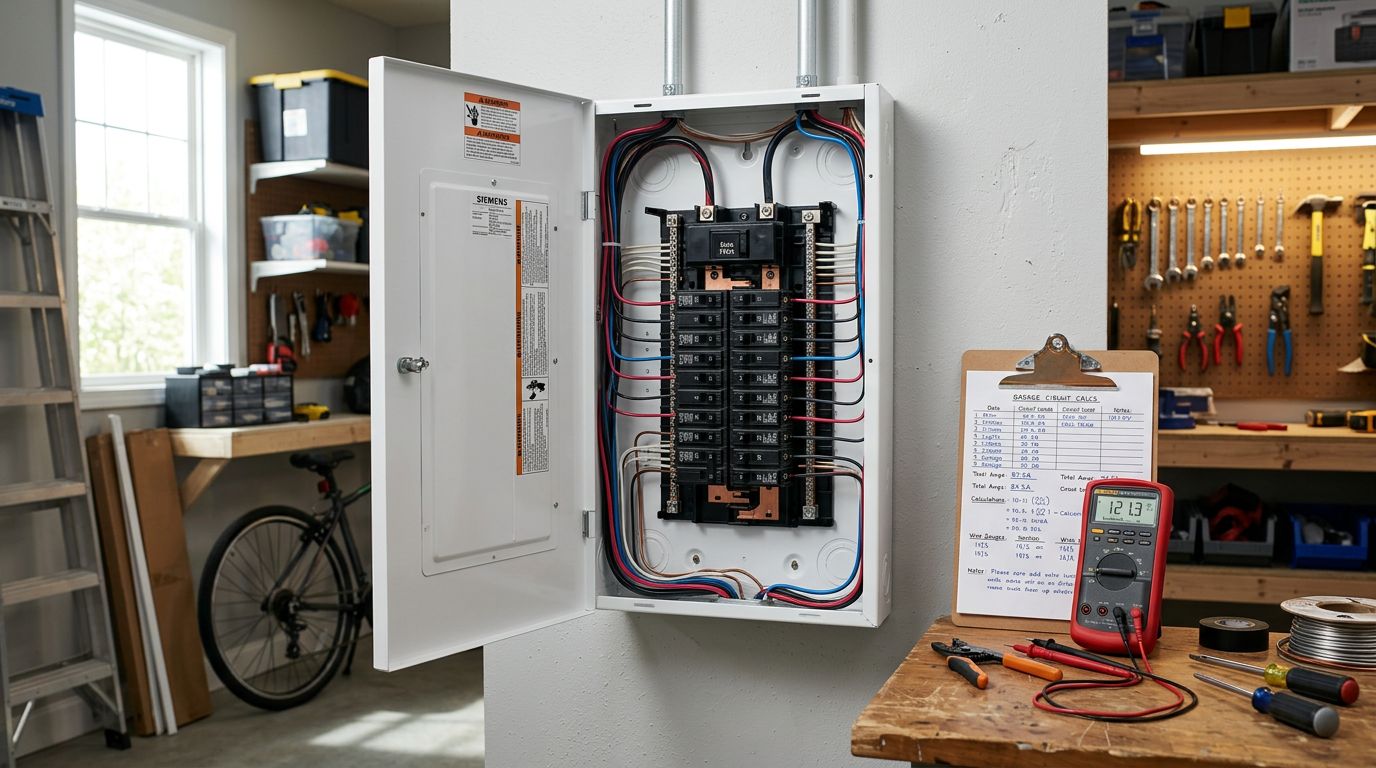
| Appliance | Typical Amperage | Recommended Wire Gauge | Breaker Size |
|---|---|---|---|
| Standard outlets and lights | 15 amps | 14 gauge | 15 amp |
| Microwave, dishwasher | 20 amps | 12 gauge | 20 amp |
| Garbage disposal | 15 to 20 amps | 12 gauge | 20 amp |
| Electric water heater | 30 amps | 10 gauge | 30 amp |
| Electric dryer | 30 amps | 10 gauge | 30 amp |
| Electric range or oven | 40 to 50 amps | 8 or 6 gauge | 40 to 50 amp |
| Central air conditioner | Varies by unit | Varies | Varies |
| EV charger | 40 to 50 amps | 8 or 6 gauge | 50 to 60 amp |
Notice how big appliances need much thicker wire. An EV charger or an electric range demands a dedicated high capacity circuit. Trying to run these on standard household wiring is a recipe for trouble.
Signs Your Home Wiring Cannot Handle Your Appliances
Your home usually gives you warnings before wiring fails. The trick is knowing what to look for. Here are the most common signs that your wiring is stretched past its limits.
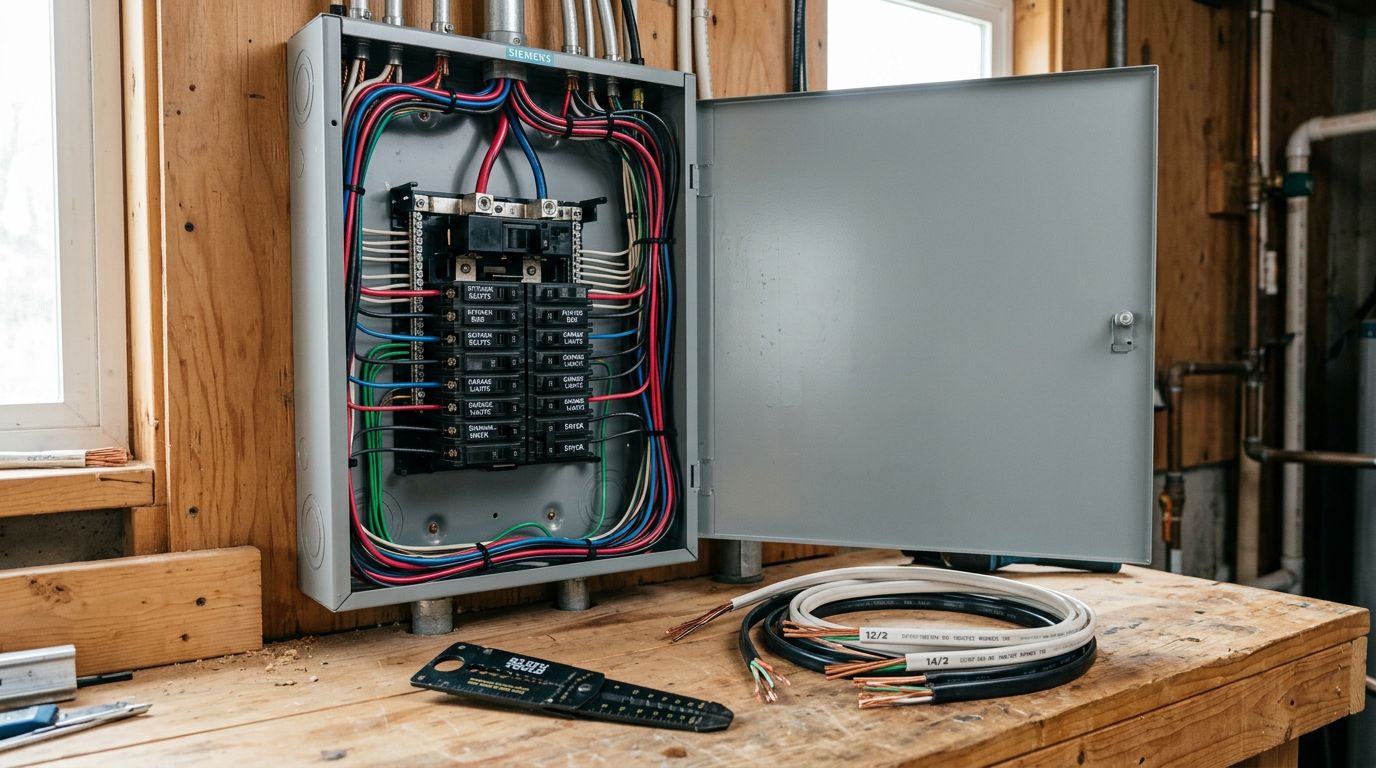
Breakers Trip Frequently
A breaker that trips now and then is doing its job. But if it trips every time you run the microwave and toaster together, the circuit is overloaded. That means the wiring cannot carry the combined load. This is one of the clearest signals that you need more capacity.
Warm or Discolored Outlets
Outlets should never feel warm to the touch. If you notice heat, scorch marks, or discoloration around a plug, stop using it. That heat means current is flowing where it should not, and it is a serious fire risk.
Flickering or Dimming Lights
When you turn on a big appliance and the lights dim, the wiring is struggling to deliver enough power. Occasional flicker on startup can be normal, but constant dimming points to overloaded or undersized wiring.
Burning Smells
A faint burning or plastic smell near an outlet or panel is an EMERGENCY. It usually means insulation is melting. Shut off the circuit and get help right away.
Buzzing Sounds
Electricity should be silent. A buzzing or crackling noise from an outlet, switch, or panel means loose connections or arcing. Both are dangerous and need immediate attention.
Relying on Extension Cords
If you depend on power strips and extension cords for major appliances, your home does not have enough properly wired outlets. That is a sign your electrical system needs an upgrade, not another adapter.
How to Match Circuit Breakers and Wiring to Appliance Loads
The breaker and the wire have to be a TEAM. The breaker exists to shut off power before the wire overheats. If the breaker is too big for the wire, it will let too much current flow and the wire could catch fire before the breaker ever trips. That mismatch is one of the most dangerous problems we find. If your panel is outdated or crowded, an electrical panel installation or repair in Oklahoma City can give you the room and capacity to add proper circuits. Here is how to keep breakers and wiring matched.
- Always size the breaker to protect the wire, never just the appliance.
- Use 15 amp breakers with 14 gauge wire and 20 amp breakers with 12 gauge wire.
- Never swap in a bigger breaker to stop nuisance trips. That defeats the safety purpose.
- Give heavy appliances their own dedicated circuits so they do not share a load.
- Account for wire length. Long runs may need a thicker gauge to avoid voltage drop.
- Confirm your panel has enough amperage to support new circuits before adding them.
Getting this right is not a place to cut corners. A properly matched breaker and wire is the single best defense against electrical fires in your home.
Common Wiring Capacity Mistakes That Cause Safety Hazards
We have seen just about every wiring shortcut there is. Most of the time, these mistakes come from good intentions and a lack of information. But the consequences can be severe. Keeping up with regular electrical maintenance and upgrades in Oklahoma City helps you catch these issues before they escalate. Here are the mistakes that cause the most trouble.
- Oversizing the breaker. Installing a 20 amp breaker on 14 gauge wire is a classic and dangerous error. The wire overheats before the breaker trips.
- Overloading a single circuit. Plugging too many appliances into one circuit forces the wiring past its rating.
- Using undersized wire for high draw appliances. Running a dryer or EV charger on wire that is too thin is asking for failure.
- Ignoring voltage drop on long runs. Wire that is fine for a short run can overheat over a long distance if the gauge is not increased.
- Relying on extension cords as permanent wiring. Cords are for temporary use, not for powering a fridge or space heater around the clock.
- Mixing aluminum and copper wire improperly. Without the right connectors, this creates corrosion and hot spots.
- Skipping dedicated circuits. Big appliances need their own line. Sharing a circuit invites overloads.
- DIY work without permits or inspection. Skipping code checks means dangerous mistakes go unnoticed.
Any one of these can turn a normal day into an emergency. The good news is they are all preventable with proper planning and professional work.
Conclusion
Wiring capacity is the quiet backbone of a safe home. When your wiring is sized correctly, your appliances run smoothly, your breakers do their job, and your family stays protected. When it is not, you get overheating, tripping breakers, and real fire risk. The key points are simple: know your appliance loads, match the wire and breaker as a pair, and watch for warning signs like warm outlets and flickering lights.
If you are adding a new appliance, upgrading your panel, or just want peace of mind, do not guess with your wiring. The team at Caliber Electric serves Oklahoma City, Moore, Norman, Midwest City, Yukon, Edmond, Del City, Mustang, Bethany, and Guthrie, and we are ready to help you get your home wired SAFELY. Reach out today to make sure your wiring can handle everything you plug into it.


